SCIENCE WORKSHEETS HABITATS

Most parents and teachers are drowning in a sea of boring, photocopied science w...
Download Original →Desert Dwellers Discovery Sheet

Explore how cacti, camels, and lizards survive extreme heat and dryness. This worksheet challenges students to match adaptations like water storage and nocturnal habits to specific desert habitats, reinforcing key survival concepts.
Download Original →Rainforest Layers Labeling Page

Identify the emergent, canopy, understory, and forest floor layers. Students cut and paste animals like toucans and jaguars into their correct zones, learning how each layer supports unique life forms and ecological roles.
Download Original →Ocean Zones Creature Sort

Sort marine animals into sunlight, twilight, and midnight zones. This activity teaches how pressure, light, and temperature change with depth, featuring anglerfish, jellyfish, and dolphins to illustrate deep-sea adaptations.
Download Original →Pond Life Food Web Builder

Connect algae, tadpoles, dragonflies, and herons in a freshwater food web. Students draw arrows to show energy flow, understanding predator-prey relationships and the importance of each organism in a pond ecosystem.
Download Original →Arctic Animal Adaptations Chart

Analyze how polar bears, seals, and arctic foxes survive freezing temperatures. Features include blubber thickness, fur color changes, and paw size. Students fill in a chart linking each trait to its survival benefit.
Download Original →Forest Habitat Scavenger Hunt

Find and list signs of life in a temperate forest: deer tracks, bird nests, mushrooms, and leaf litter. This outdoor-inspired worksheet encourages observation skills and understanding of forest floor, canopy, and understory niches.
Download Original →Grassland Grazers and Predators
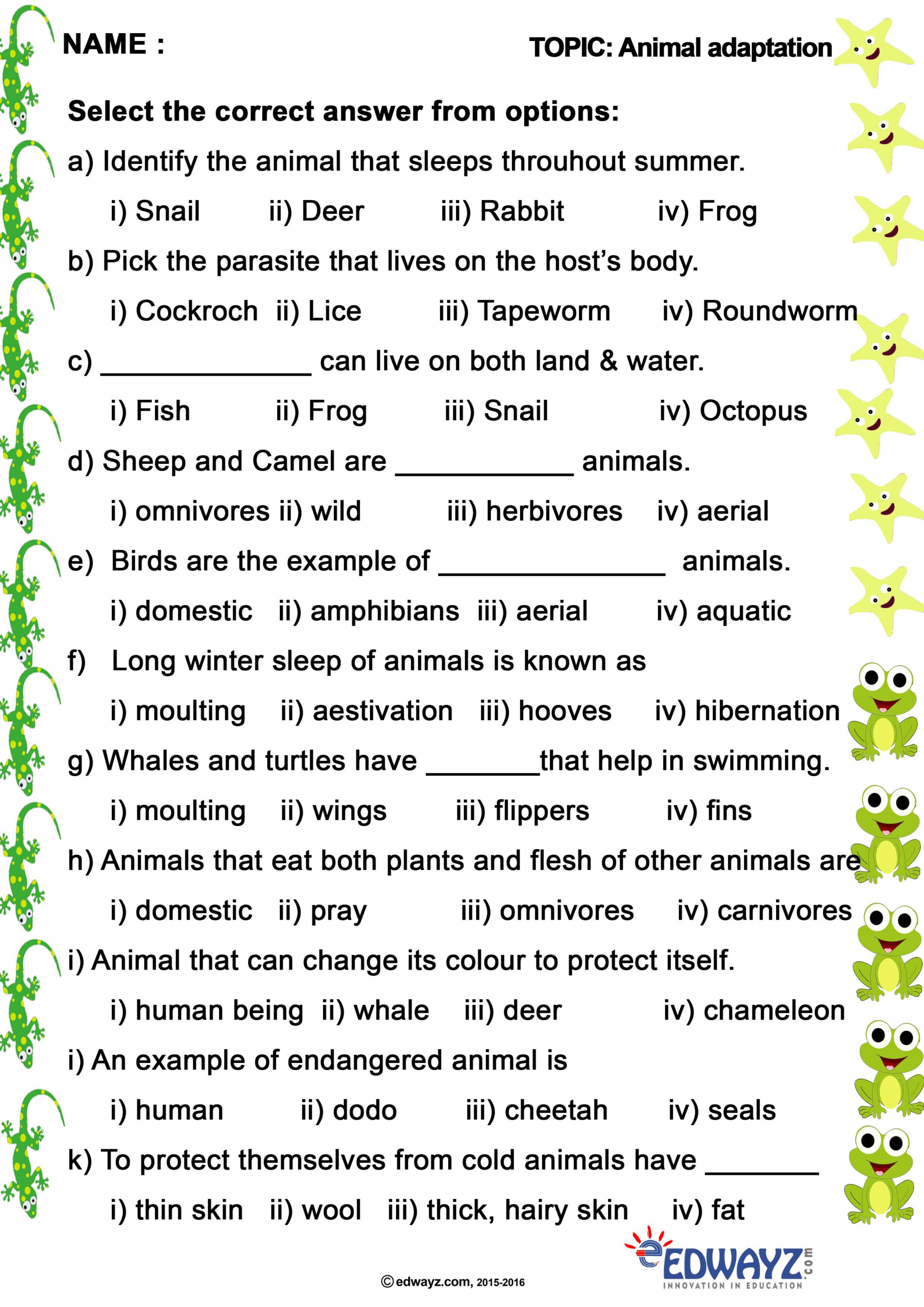
Match African savanna animals like zebras, lions, and giraffes to their roles as herbivores or carnivores. Students also identify how grasses support the entire food chain, from insects to apex predators.
Download Original →Wetland Water Filter Experiment
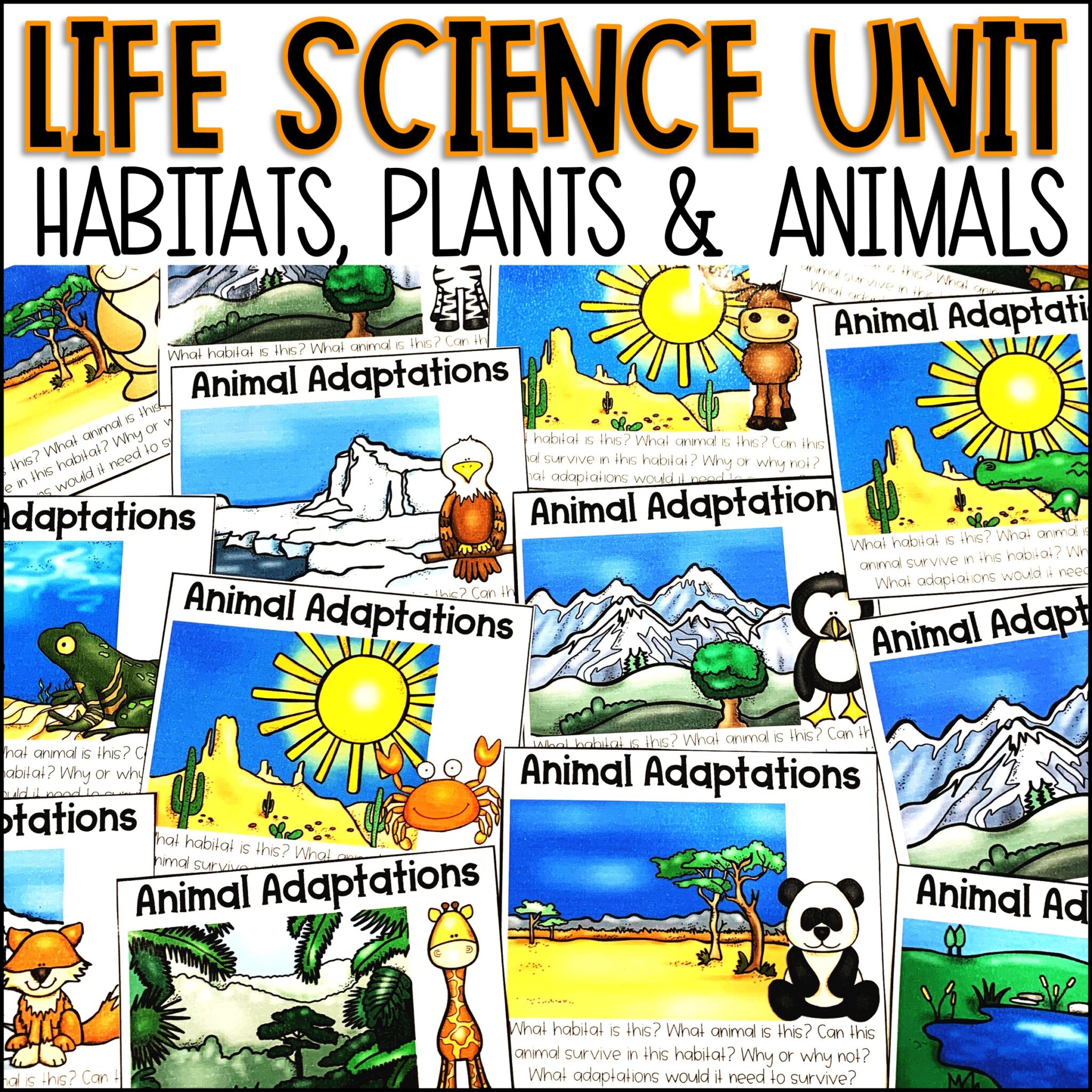
Simulate how wetlands clean water using soil, sand, and plants. Students record observations of muddy water becoming clearer, learning about natural filtration and the importance of marshes for ecosystem health.
Download Original →Cave Habitat Creature Cards
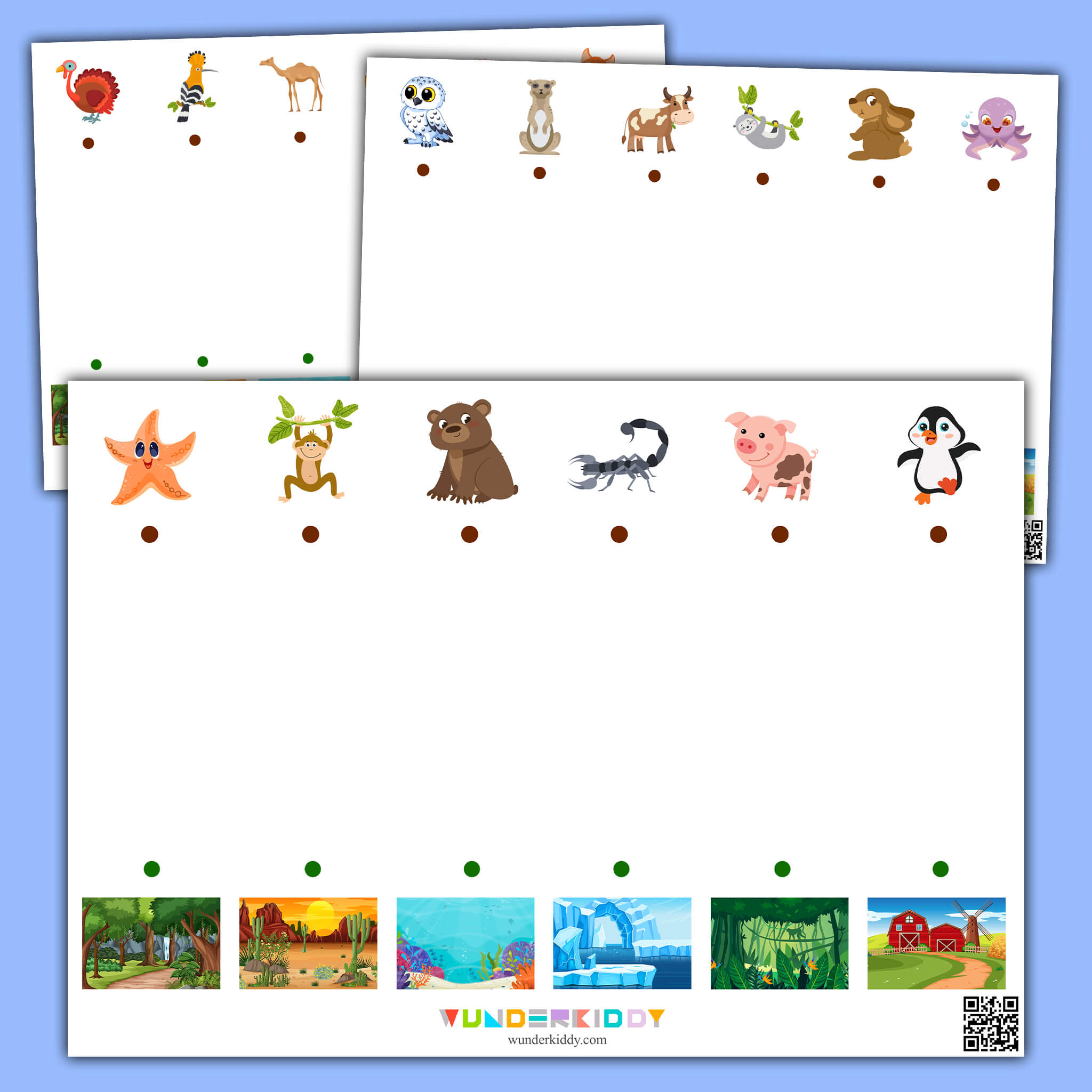
Discover troglobites like blind cave fish and bats. This worksheet features fact cards where students note adaptations such as loss of eyesight and echolocation, explaining life in total darkness with limited food.
Download Original →Mountain Ecosystem Elevation Zones
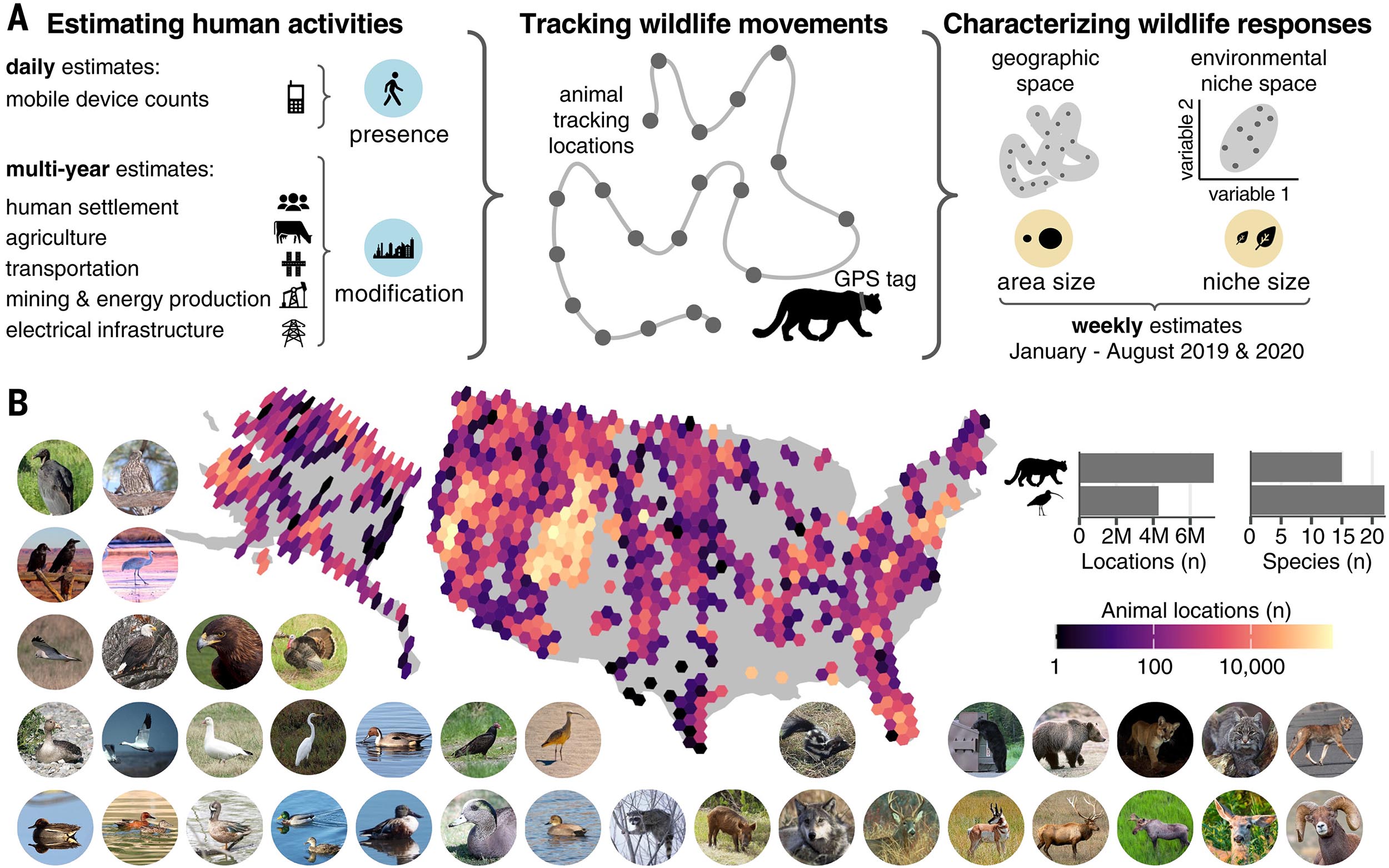
Label life zones from base to peak: forests, meadows, tundra, and snow. Students match animals like mountain goats and marmots to their elevation, learning how temperature and oxygen change with altitude.
Download Original →Exploring Forest Habitats: A Science Worksheet
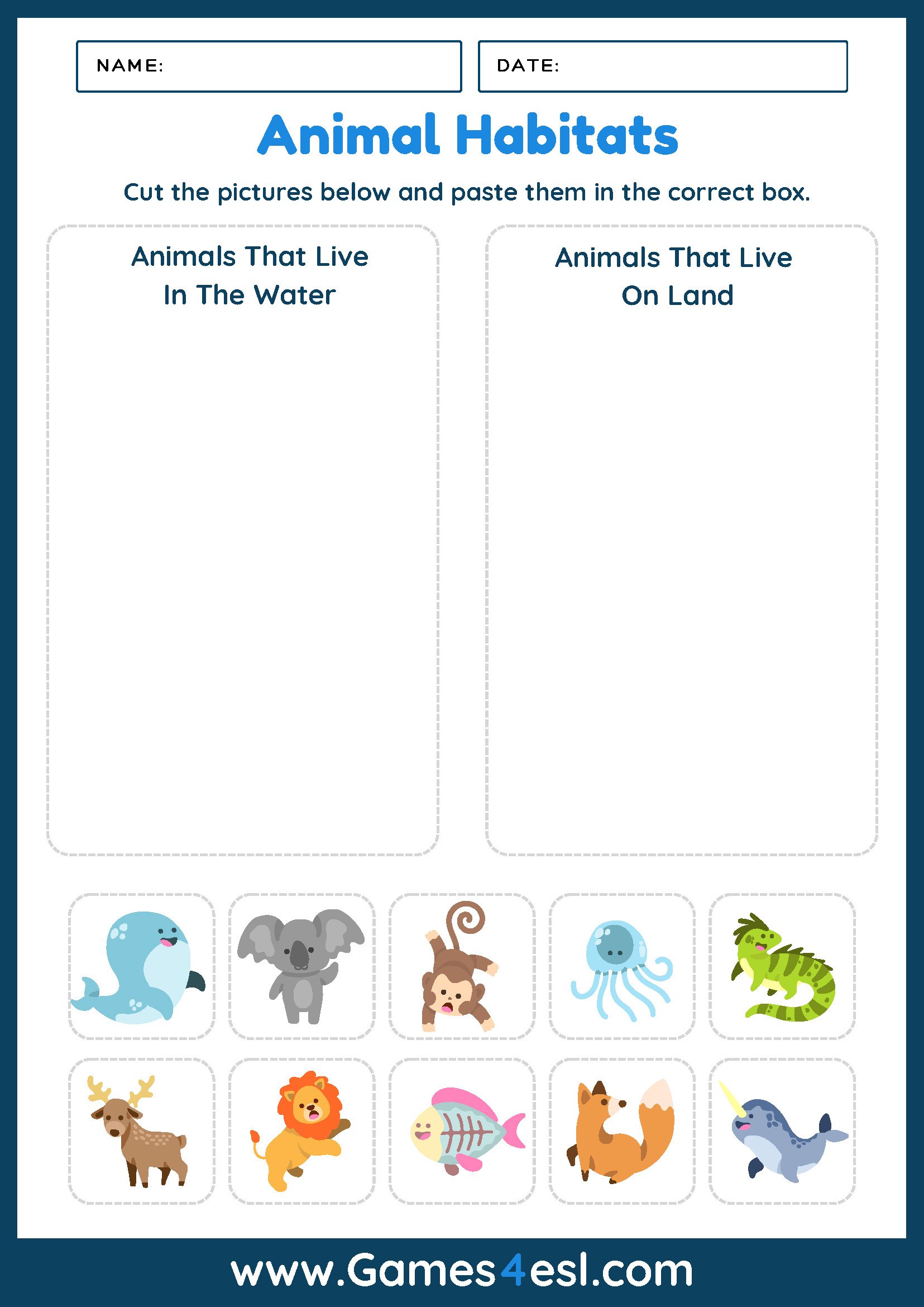
This worksheet guides students through identifying animals and plants in a forest ecosystem. Activities include matching creatures to their homes and understanding food chains, fostering curiosity about woodland biodiversity and ecological relationships.
Download Original →Ocean Habitat Discovery Sheet for Kids
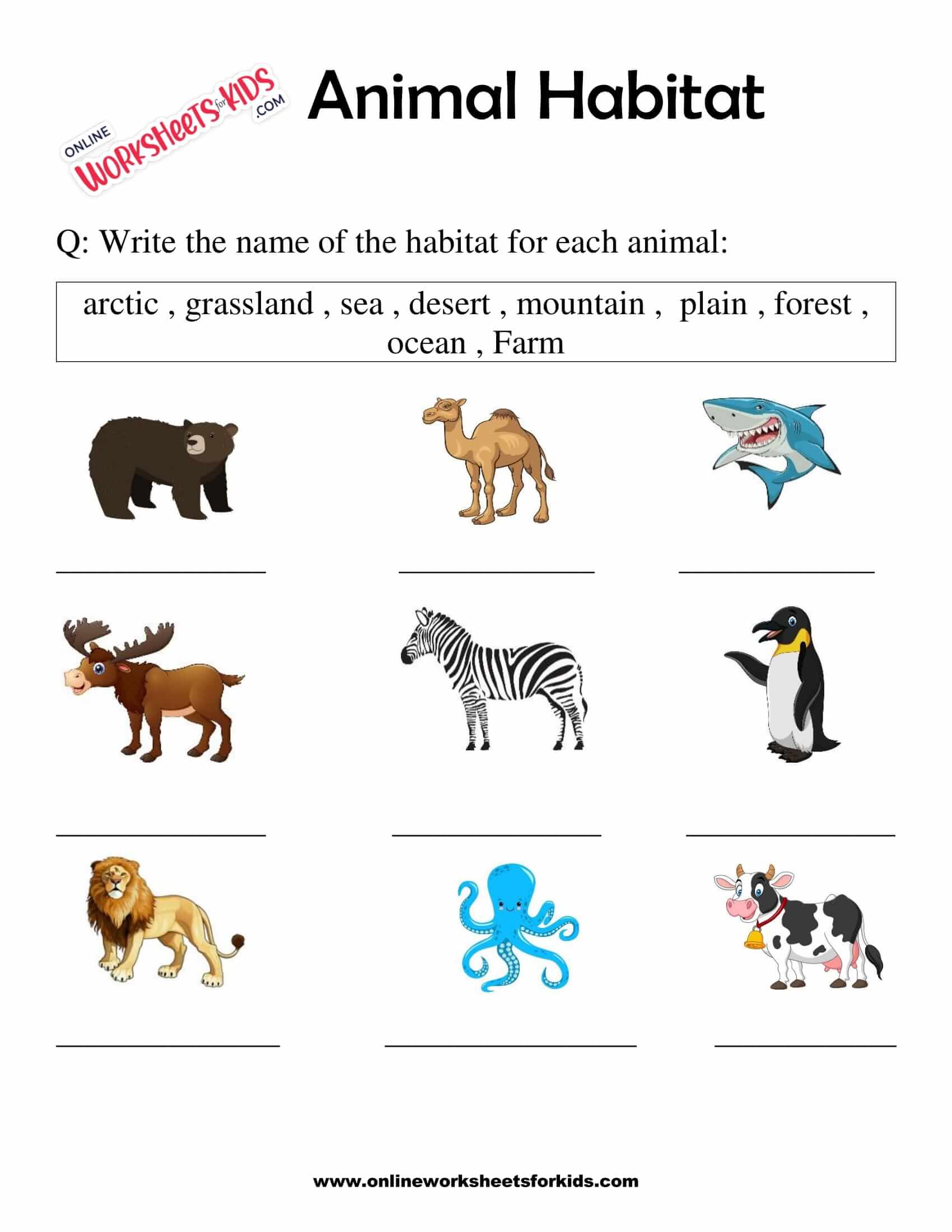
Dive into marine science with this engaging worksheet. Children label ocean zones, identify sea creatures, and learn about adaptations like gills and blubber. Perfect for introducing underwater ecosystems and the importance of ocean conservation.
Download Original →Desert Habitat Science Activity Page

Uncover the secrets of arid environments with this worksheet. Students explore how cacti store water and animals like camels survive heat. Includes a fun matching game linking adaptations to survival, ideal for desert ecology lessons.
Download Original →Polar Habitat Learning Worksheet

Journey to the icy poles with this educational sheet. Kids identify polar bears, penguins, and seals, then learn about blubber insulation and migration. A simple diagram activity reinforces how animals thrive in freezing temperatures.
Download Original →


